
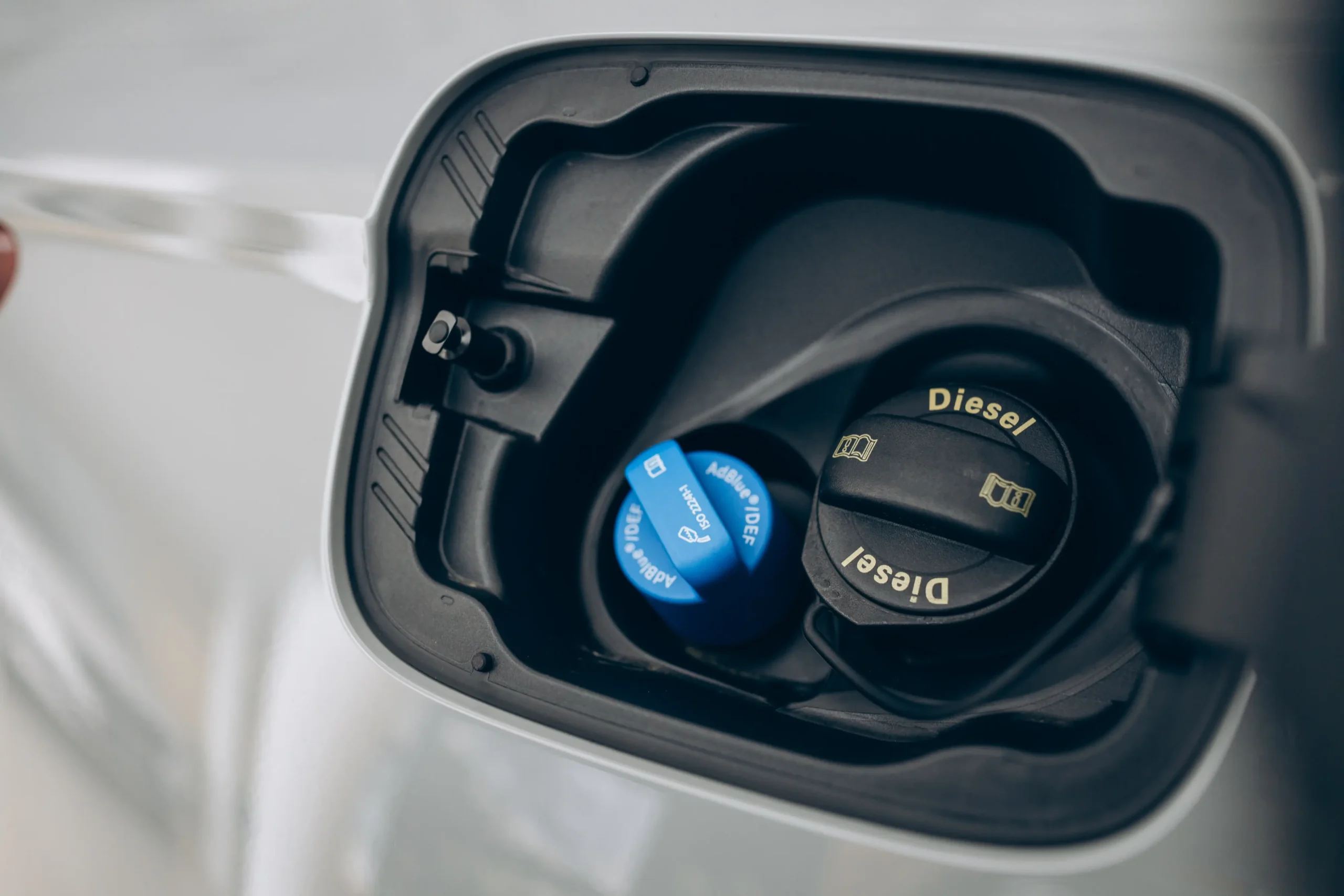
Key Takeaways
- AdBlue is a diesel emissions control fluid that reduces harmful nitrogen oxides (NOx) by 90%, making modern diesel engines significantly cleaner and meeting strict EU emissions standards
- AdBlue system faults cost £800-2,500 to repair if left unaddressed, but regular maintenance and prompt repairs prevent expensive component failures
- Faulty AdBlue systems trigger warning lights and reduced engine performance, with some vehicles entering limp mode if issues aren’t resolved quickly
- Professional AdBlue system repairs include diagnostics, sensor testing, system cleaning, and component replacement as needed, restoring full emissions compliance
- Regular AdBlue top-ups and professional maintenance extend system life by 100,000+ miles, preventing emergency repairs and maintaining vehicle reliability
- AdBlue system health directly impacts vehicle resale value, with potential buyers expecting full emissions compliance and functioning systems
If you own a modern diesel vehicle, you’ve likely encountered AdBlue—a colourless, odourless fluid that plays a crucial role in your vehicle’s emissions control system. But many diesel owners don’t fully understand what AdBlue does, why it matters, or what happens when the system malfunctions.
The reality is straightforward: AdBlue is essential for modern diesel engines. Without it, your vehicle cannot meet EU emissions standards. When AdBlue systems fail, the consequences are serious: warning lights, reduced performance, and expensive repairs.
Understanding AdBlue’s importance, recognising system faults, and choosing professional repairs ensures your diesel vehicle remains compliant, reliable, and valuable.
This guide explains how AdBlue systems work, why they’re important, what happens when they fail, and how professional repairs restore full functionality.
Understanding AdBlue and Emissions Control
What Is AdBlue?
AdBlue is a diesel emissions control fluid containing 32.5% urea and 67.5% deionised water. When injected into your vehicle’s exhaust system, it undergoes a chemical reaction that converts harmful nitrogen oxides (NOx) into harmless nitrogen and water vapour.
This process, called Selective Catalytic Reduction (SCR), reduces NOx emissions by approximately 90%, making modern diesel engines significantly cleaner than older diesel vehicles.
Why AdBlue Is Necessary
Diesel engines produce nitrogen oxides as a byproduct of combustion. These gases contribute to air pollution and respiratory health problems. EU emissions standards (Euro 5, Euro 6, and beyond) require diesel vehicles to reduce NOx emissions dramatically.
AdBlue technology achieves this reduction efficiently. Without AdBlue, modern diesel engines cannot meet emissions standards and would be illegal to sell in Europe.
How the AdBlue System Works
1. AdBlue storage: Your vehicle contains an AdBlue tank (typically 20-30 litres) separate from your fuel tank.
2. Dosing system: When your engine runs, the engine management system calculates how much AdBlue to inject based on engine load, RPM, and exhaust temperature.
3. Injection: An injector sprays AdBlue into the exhaust stream upstream of the SCR catalyst.
4. Chemical reaction: AdBlue reacts with NOx in the SCR catalyst, converting it to harmless nitrogen and water.
5. Monitoring: Sensors monitor AdBlue concentration, tank level, and system function, alerting you when top-ups are needed.
Common AdBlue System Faults
AdBlue Tank Level Low
Symptoms:
- AdBlue warning light on dashboard
- “AdBlue level low” message on instrument cluster
- No performance reduction (yet)
Cause: Normal consumption. AdBlue is consumed during normal driving and requires regular top-ups.
Solution: Top up AdBlue at a fuel station or specialist. Most vehicles require top-ups every 10,000-15,000 miles depending on driving patterns. Professional AdBlue diagnostics can identify any underlying system issues before they become serious problems.
AdBlue Quality Issues
Symptoms:
- “AdBlue quality poor” warning message
- Reduced engine performance
- Potential limp mode activation
Cause: Contaminated or degraded AdBlue (from poor storage, contamination, or age).
Solution: Professional system cleaning and fluid replacement restores system function. Always use high-quality AdBlue meeting ISO 22241 standards to prevent future contamination issues.
AdBlue Heater Fault
Symptoms:
- “AdBlue heater malfunction” warning
- Reduced performance in cold weather
- Potential limp mode
Cause: Faulty heater element or electrical connection. AdBlue must be heated to function properly in cold conditions.
Solution: Replace the heater element or repair electrical connections.
SCR Catalyst Fault
Symptoms:
- “SCR system malfunction” warning
- Significant performance reduction
- Potential limp mode
Cause: Catalyst damage, contamination, or failure.
Solution: Professional SCR catalyst diagnostics and cleaning determine the cause. SCR catalyst technology is sophisticated, requiring expert assessment to determine whether cleaning or replacement is needed.
AdBlue Injector Fault
Symptoms:
- “AdBlue injector malfunction” warning
- Reduced performance
- Potential limp mode
Cause: Injector clogging, electrical fault, or mechanical failure.
Solution: Injector cleaning or replacement depending on severity.
Sensor Faults
Symptoms:
- Various AdBlue-related warning messages
- Inconsistent system function
- Potential false warnings
Cause: Faulty level sensors, temperature sensors, or NOx sensors.
Solution: Sensor replacement or cleaning depending on fault type.
Benefits of Professional AdBlue System Repairs
Emissions Compliance
Professional repairs ensure your vehicle remains compliant with EU emissions standards. This is essential for:
- Passing MOT testing
- Legal road use
- Avoiding fines and penalties
- Maintaining vehicle value
Performance Restoration
Faulty AdBlue systems often trigger limp mode, severely restricting engine power. Professional AdBlue system repairs restore full performance:
- Normal power delivery
- Responsive acceleration
- Improved fuel economy
- Comfortable driving experience
Extended System Life
Professional maintenance and prompt repairs extend AdBlue system life by 100,000+ miles:
- Regular fluid top-ups prevent tank issues
- Professional cleaning prevents injector clogging
- Sensor maintenance ensures accurate monitoring
- Early fault detection prevents catastrophic failures
Cost Savings
Prompt professional repairs prevent expensive component failures:
- Early intervention costs £300-800
- Delayed repairs requiring component replacement cost £1,500-2,500
- Complete system failure can cost £3,000+
Regular maintenance is significantly cheaper than emergency repairs.
Reliability and Peace of Mind
A functioning AdBlue system means:
- No unexpected warning lights
- Predictable vehicle performance
- No emergency breakdowns
- Confidence in your vehicle’s reliability
Environmental Benefits
A properly functioning AdBlue system ensures your vehicle meets emissions standards, reducing environmental impact and contributing to cleaner air quality.
The AdBlue System Repair Process
Step 1: Comprehensive Diagnostics
Professional diagnostic equipment connects to your vehicle’s engine management system and reads all fault codes related to the AdBlue system. This identifies the specific fault causing issues and guides the repair strategy.
Step 2: Visual Inspection
The AdBlue tank, injector, heater, and sensor connections are visually inspected for obvious damage, corrosion, or contamination.
Step 3: Sensor Testing
Each sensor is tested individually to verify function:
- Level sensors: Confirm accurate tank level reading
- Temperature sensors: Verify heater operation
- NOx sensors: Confirm emissions monitoring
Step 4: System Pressure Testing
Pressure testing identifies leaks in tanks, lines, and connections that could compromise system function or cause AdBlue loss.
Step 5: Component Assessment
Based on diagnostics and testing, your specialist determines which components need cleaning, repair, or replacement.
Step 6: Repair or Replacement
Components are repaired or replaced as needed:
- Injector cleaning: Removes clogging deposits
- Heater replacement: Replaces faulty heating elements
- Sensor replacement: Replaces faulty sensors
- Tank cleaning: Removes contamination from tanks
- Line flushing: Removes debris from fluid lines
Step 7: System Refill and Bleed
The system is refilled with fresh, high-quality AdBlue and bled to remove air pockets.
Step 8: Testing and Verification
The vehicle is tested to verify:
- All warning lights are cleared
- System functions correctly
- Performance is restored
- No new faults appear
Step 9: Road Testing
A final road test confirms the vehicle performs normally and the AdBlue system operates correctly under various driving conditions.
AdBlue Maintenance and Prevention
Regular Top-Ups
AdBlue is consumed during normal driving. Most vehicles require top-ups every 10,000-15,000 miles. Regular top-ups prevent tank level warnings and ensure system function.
Top-up locations:
- Fuel stations (most major chains)
- Specialist automotive retailers
- Vehicle dealerships
- Independent specialists offering professional AdBlue services
Cost: Typically £10-20 per top-up depending on location and quantity.
Quality AdBlue
Always use high-quality AdBlue meeting ISO 22241 standards. Poor-quality AdBlue can cause system problems:
- Contamination
- Injector clogging
- Sensor faults
- Catalyst damage
Reputable suppliers (major fuel stations, dealerships) guarantee quality. Professional specialists can advise on quality AdBlue products and help prevent contamination issues.
Professional System Checks
Regular professional checks identify potential issues before they become serious:
- Annual system inspection
- Sensor function verification
- Fluid quality assessment
- Early fault detection
Professional checks typically cost £50-100 and can prevent expensive repairs.
Proper Storage
If your vehicle sits unused for extended periods:
- Maintain AdBlue tank level to prevent corrosion
- Use fuel stabiliser to maintain fuel quality
- Have the system checked before extended use
Cold Weather Considerations
AdBlue freezes at -11°C. In cold climates:
- Ensure your heater is functioning properly
- Allow extra warm-up time in winter
- Consider garaged parking in extreme cold
Real-World Impact: Case Studies
Case Study 1: Early Intervention
Vehicle: 2017 BMW 320d diesel
Problem: “AdBlue quality poor” warning, slight performance reduction
Solution: Professional system diagnostics, tank cleaning, fluid replacement
Results:
- Warning cleared immediately
- Performance fully restored
- Cost: £350
- No further issues for 80,000 miles
Owner feedback: “I caught the problem early. Professional cleaning was affordable and prevented what could have been an expensive repair.”
Case Study 2: Delayed Repair
Vehicle: 2015 Mercedes-Benz C-Class 2.1 diesel
Problem: Ignored AdBlue warnings for 6 months, now severe limp mode, multiple fault codes
Solution: Complete system diagnostics, injector replacement, sensor replacement, system flush
Results:
- Multiple components required replacement
- Performance fully restored
- Cost: £1,800
- Extensive work required due to delayed repair
Owner feedback: “I should have addressed the warning lights earlier. The repair cost would have been half if I’d acted promptly.”
Case Study 3: Preventive Maintenance
Vehicle: 2019 Audi A4 2.0 TDI diesel with 95,000 miles
Problem: No current issues, but owner seeking preventive maintenance
Solution: Annual professional system check, sensor cleaning, fluid top-up
Results:
- All systems functioning optimally
- Early detection of minor sensor degradation
- Preventive sensor replacement (£200) prevented future failure
- Cost: £400 total for preventive work
- Confidence in system reliability for next 100,000 miles
Owner feedback: “Preventive maintenance gives me peace of mind. Small investment now prevents expensive emergency repairs later.”
Statistics and Research
According to industry research:
- AdBlue system faults affect 15-20% of diesel vehicles over their operational life
- Early intervention costs 60-70% less than delayed repairs requiring component replacement
- Regular AdBlue top-ups extend system life by 50,000+ miles compared to vehicles with inconsistent maintenance
- Professional system checks identify 85%+ of potential faults before they cause performance issues
- Vehicles with well-maintained AdBlue systems have 40% fewer emergency breakdowns compared to vehicles with neglected systems
- AdBlue system condition affects vehicle resale value by £500-1,500 depending on fault severity
Choosing an AdBlue System Repair Specialist
Not all AdBlue repairs are created equal. Choosing the right specialist is crucial:
Look for:
- Certified technicians with proven AdBlue system experience
- Comprehensive diagnostic equipment
- Access to high-quality AdBlue and replacement components
- Transparent communication about fault causes and repair options
- Warranty on repair work
- Positive customer reviews and testimonials
Avoid:
- Specialists offering AdBlue system deletion (illegal in the UK)
- Pressure to replace components unnecessarily
- Lack of diagnostic assessment before repair
- Budget pricing that seems too good to be true
- Technicians who can’t explain the repair process
Professional AdBlue system repairs typically cost £300-2,500 depending on fault type and component replacement needs. Early intervention significantly reduces costs.
Common Questions About AdBlue Systems
How often do I need to top up AdBlue?
This depends on your driving patterns. Most vehicles require top-ups every 10,000-15,000 miles. Your vehicle’s instrument cluster will display warnings when top-ups are needed. Always respond promptly to warnings.
Can I use any AdBlue?
No. Always use high-quality AdBlue meeting ISO 22241 standards. Poor-quality AdBlue can cause system problems. Reputable suppliers (major fuel stations, dealerships) guarantee quality.
What happens if I ignore AdBlue warnings?
Ignoring warnings can lead to:
- System component damage
- Limp mode activation (severely reduced power)
- Expensive emergency repairs
- MOT failure
- Potential fines for emissions non-compliance
Always address AdBlue warnings promptly.
Is AdBlue system repair expensive?
Early intervention typically costs £300-800. Delayed repairs requiring component replacement cost £1,500-2,500. Complete system failure can cost £3,000+. Regular maintenance and prompt repairs keep costs manageable.
Can I delete my AdBlue system?
No. AdBlue system deletion is illegal in the UK and can result in:
- MOT failure
- Fines up to £1,000
- Vehicle impoundment
- Prosecution
Always maintain your AdBlue system in working order.
The Future of AdBlue Technology
AdBlue technology is evolving:
- Improved formulations: New AdBlue formulations will be more stable and resistant to contamination
- Advanced monitoring: AI-powered systems will predict maintenance needs before faults occur
- Integrated systems: Future vehicles will integrate AdBlue systems more efficiently with engine management
- Electric vehicle transition: As EVs become dominant, AdBlue technology will eventually become obsolete
Conclusion
AdBlue systems are essential for modern diesel vehicles, ensuring emissions compliance and environmental responsibility. Understanding your system’s importance, recognising fault symptoms, and choosing professional repairs ensures your vehicle remains compliant, reliable, and valuable.
Regular AdBlue top-ups, professional maintenance, and prompt repairs prevent expensive component failures and maintain your vehicle’s performance. Early intervention is significantly cheaper than delayed repairs requiring extensive component replacement.
If you’re experiencing AdBlue system warnings or performance issues, Jedox Performance offers professional AdBlue system repairs with comprehensive diagnostics, expert technicians, and proven solutions. Our specialists will assess your system, discuss realistic repair options, and deliver results that restore full functionality and emissions compliance. Whether you need sensor testing, system cleaning, or component replacement, we provide complete AdBlue repair solutions.
Don’t ignore AdBlue warnings. Professional repairs are the smart, cost-effective solution.
Frequently Asked Questions
What does the AdBlue warning light mean?
The AdBlue warning light typically indicates low fluid level, system malfunction, or quality issues. Professional diagnostics determine the specific cause. Address warnings promptly to prevent more serious problems.
Can I drive with an AdBlue warning light?
You can drive short distances, but not recommended for extended use. Continued driving with AdBlue faults can trigger limp mode, severely restricting power. Address warnings promptly to prevent performance issues.
How much does AdBlue cost?
AdBlue typically costs £10-20 per top-up (usually 5-10 litres) depending on location and supplier. Annual AdBlue costs are typically £50-100 depending on driving patterns.
Will AdBlue system repair void my warranty?
Professional repairs by certified technicians shouldn’t void your warranty. However, check your vehicle’s warranty terms or contact your manufacturer. Always disclose any maintenance to your warranty provider.
How long does AdBlue system repair take?
Repair time depends on fault type. Simple top-ups take 10-15 minutes. Comprehensive repairs with component replacement take 2-4 hours. Your specialist will provide realistic time estimates after diagnostics.